Search is no longer just about typing a keyword into Google and waiting for a list of blue links. The rise of artificial intelligence has rewritten the rules of discovery, and now, a huge share of traffic is being redirected through AI-driven assistants, chatbots, and conversational platforms. For businesses and marketers, this is more than a technological shift. It is a direct shakeup of the strategies that have defined SEO for the past two decades.
Let’s take a closer look at what’s happening, why it matters, and how you can actually adapt.
Search once had a predictable rhythm. You optimized your site for a keyword, built authority with backlinks, and hoped to climb page one. That playbook still exists, but it is no longer the only one. Today, platforms like ChatGPT, Perplexity, Microsoft Copilot, and even Google’s own Gemini are taking on the role of gatekeepers.
Instead of showing ten links, they summarize. Instead of pushing users to your site, they provide instant answers. It feels helpful to the user, but for businesses that depend on clicks, it introduces a new tension. Traffic is getting filtered through AI middle layers that decide what content gets included in answers and what doesn’t.
The big shift with AI traffic is intent. Traditional search often brings curious users who are still browsing. AI-driven queries, on the other hand, are more focused and conversational. People ask specific questions like they would ask a human. They are not just looking for options but often expecting solutions on the spot.
This means your content strategy cannot only rely on ranking well in Google anymore. It has to be structured in a way that makes AI models “choose” your brand when forming responses. That comes down to trust signals, clarity, and context rather than just stuffing keywords.
AI assistants don’t crawl the web in real time the way a search engine does. They rely on training data, citations, and authority signals to decide which answers to serve. If your brand is mentioned across reputable sources, it has a better chance of being surfaced. If your content is contextually rich and well structured, it is easier for AI systems to digest and reference.
Here’s the catch. AI doesn’t care much about how beautiful your website looks. It cares about clarity, authority, and the ability to answer questions directly. That is a subtle but important mindset shift for marketers.
Adapting to this shift requires rethinking how we create and distribute content. Some practical strategies stand out:
Chatbots are not just customer service tools anymore. Businesses are using them as direct acquisition channels. Imagine someone landing on your site. Instead of scanning a blog post, they ask your chatbot a question and get an instant tailored answer. That interaction, if designed well, keeps the visitor engaged and more likely to convert.
The same applies to messaging platforms like WhatsApp or Facebook Messenger, where AI-driven bots act as mini search engines inside apps people already use daily. This is traffic happening outside the traditional web entirely.
Picture a brand that invested heavily in traditional SEO for years. They ranked well, but as AI platforms began summarizing answers, their traffic dipped. Instead of panicking, they started publishing content with conversational Q&A structures, making it easy for AI to parse. They also built authority with guest contributions and interviews. Over time, not only did they regain traffic, but they found their content being cited directly by AI tools in response to user queries.
That is the essence of adapting — not resisting the shift but shaping content for where the eyeballs are going.
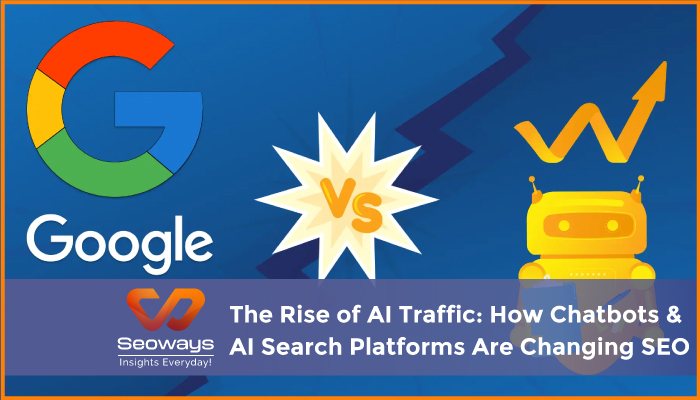
One of the biggest questions marketers keep asking is whether Google will remain the dominant player. The answer is layered. Google still controls the majority of search queries, but younger users are increasingly comfortable asking AI assistants first. For certain categories like quick definitions, travel advice, or coding help, AI platforms are already the preferred option.
The future is less about one search engine and more about an ecosystem of discovery tools, all powered by AI. Google will still matter, but it will no longer be the only door to online visibility.
The businesses that thrive in this AI-first landscape will be those that stop obsessing over algorithms and start focusing on clarity, authority, and presence. The rules of SEO are not gone. They are just expanding into new territory.
Think of it this way. AI isn’t stealing traffic. It is redistributing it. If you adapt your strategy to be AI-friendly, you are not only future-proofing but also opening doors to entirely new audiences.
| Section | Key Idea | Why It Matters |
| The New Gatekeepers | AI platforms filter traffic | They decide what users see first |
| Why AI Traffic Feels Different | Conversational intent | Visitors come with sharper expectations |
| How AI Decides | Authority, mentions, clarity | Visibility depends on context and trust |
| Content Strategies | Entities, answers, consistency | Helps AI choose your brand |
| Chatbots in Flow | Beyond support | Bots drive conversions and keep users engaged |
| Google vs AI | Search landscape shift | Multiple discovery platforms rising |
| Preparing Ahead | Focus on clarity and presence | Build an AI friendly content ecosystem |


Request your best quote today!”

With the #1 Digital Marketing Agency!
We specialize in SEO, driving traffic, enhancing online visibility, and transforming markets with innovative strategies.
Seoways LLP,
1st Floor, SKK Complex,
Mohanur Road,
TN – 637001
Skype/Telegram: Seoways
Phone: +91 959 77 00 888