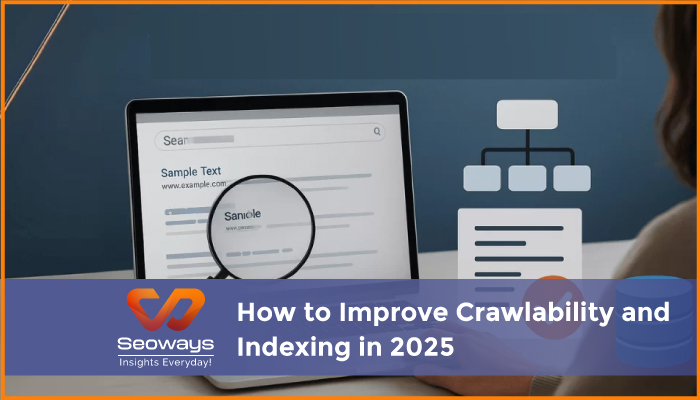
Search engines are like curious librarians. They crawl your website, scan through the content, and decide how it should be indexed in their giant library of the internet. If they can’t crawl your site easily, or if they don’t think your content is worth indexing, you’ll never make it to the front shelf.
In 2025, crawlability and indexing are more important than ever. With Google’s AI-driven search updates, ChatGPT-style answers, and other AI tools pulling data directly from web pages, the way search engines understand and categorize content has changed. What worked in 2020 feels outdated now.
So if you’re wondering why your content isn’t showing up, or why your site feels invisible despite great articles, this guide will walk you through exactly how to fix it.
Before we dive into the strategies, let’s get clear on the basics.
Crawlability is simply how easily search engine bots can move through your website. If your site is well-structured, bots can smoothly follow links, read content, and discover new pages.
Indexing happens after crawling. Once bots analyze your pages, they decide which ones to include in Google’s index. If your page isn’t indexed, it might as well not exist online.
When I first built my personal blog back in 2015, I didn’t even know what robots.txt was. I blocked half my site without realizing it. No wonder my pages never ranked. That mistake taught me how critical crawlability is.
The landscape has shifted. It’s no longer just about ranking on page one. AI-driven tools like Google’s AI Overviews, Bing Chat, and even ChatGPT pull data directly from indexed pages.
That means if your content isn’t crawlable and indexed properly, not only will you miss out on rankings, but you’ll also miss out on being included in these AI-generated answers. In other words, your site won’t even enter the conversation.
Imagine writing the best guide in your niche but having it locked away in a room with no door. That’s what poor crawlability feels like.
Technical SEO is the foundation. If your site is hard for bots to access, nothing else matters.
I once worked with an ecommerce brand that couldn’t figure out why their product pages weren’t showing up. Turns out their developer had blocked the entire product folder in robots.txt during testing and forgot to remove it. Small error, huge impact.
Think of your site as a building. If the hallways are confusing, visitors (and bots) will get lost.
When I fixed internal linking on one of my blogs, I noticed a sudden jump in indexed pages. Bots finally discovered posts that had been buried deep.
Search engines don’t just crawl structure. They crawl content. And in 2025, AI has made them pickier.
Here’s a simple trick I use: after writing a piece, I search for my own title in Google. If I can’t imagine my page being the best answer among the top 5, I go back and improve it.
Bots crawl faster and index more pages on websites that load quickly.
A client of mine once had an amazing blog but a painfully slow site. Google crawled only a fraction of their pages because the server kept timing out. After moving to a better host, crawl rate doubled.
In 2025, Google Search Console remains the best window into crawlability and indexing issues.
I make it a habit to check Search Console every Monday morning, just like checking emails. It’s the quickest way to catch problems before they snowball.
AI has changed how indexing works. Google’s Search Generative Experience and AI-powered search rely heavily on context and entity recognition.
That means your content should be:
I’ve noticed that when I include personal experiences or original examples, my pages are more likely to show up in AI-powered summaries. Bots can tell the difference between filler and authenticity.
Crawlability isn’t a one-time fix. Algorithms change, site structures evolve, and content grows.
One of my biggest wins came from treating crawlability like cleaning a house. If you let dust pile up, it becomes overwhelming. But with small, consistent efforts, your site always feels fresh and discoverable.
Most of these mistakes aren’t malicious. They’re just oversights. But search engines don’t care whether it was an accident or not—they’ll still ignore your pages.
Improving crawlability and indexing in 2025 is less about tricks and more about clarity. Search engines want websites that are easy to explore, filled with valuable content, and structured in a way that makes sense.
If you focus on removing technical barriers, improving site structure, writing authentic content, and keeping performance high, your site will naturally become more crawlable and indexable.
And remember, this isn’t just about pleasing bots. It’s about creating a site that’s genuinely useful for humans too. When you do that, Google notices.
| Section | Key Takeaways | Action Steps |
| Crawlability and Indexing Basics | Bots must crawl before they index | Ensure robots.txt and sitemap are correct |
| Why It Matters in 2025 | AI-driven search depends on indexing | Optimize for Google AI and ChatGPT |
| Fix Technical Barriers | Avoid blocks and crawl errors | Check robots.txt, sitemaps, errors |
| Simplify Site Structure | Easy navigation helps bots | Use internal linking, avoid orphan pages |
| Optimize Content | Quality and context win | Write unique, valuable, structured content |
| Speed and Performance | Faster sites get crawled more | Improve Core Web Vitals and hosting |
| Google Search Console | Your diagnostic tool | Use Index Coverage and Crawl Stats |
| AI and Crawlability | Search is context-first now | Add authentic stories and references |
| Monitor and Adapt | SEO is ongoing | Monthly audits and updates |
| Common Mistakes | Small errors cause big losses | Fix noindex, duplicates, thin pages |


Request your best quote today!”

With the #1 Digital Marketing Agency!
We specialize in SEO, driving traffic, enhancing online visibility, and transforming markets with innovative strategies.
Seoways LLP,
1st Floor, SKK Complex,
Mohanur Road,
TN – 637001
Skype/Telegram: Seoways
Phone: +91 959 77 00 888