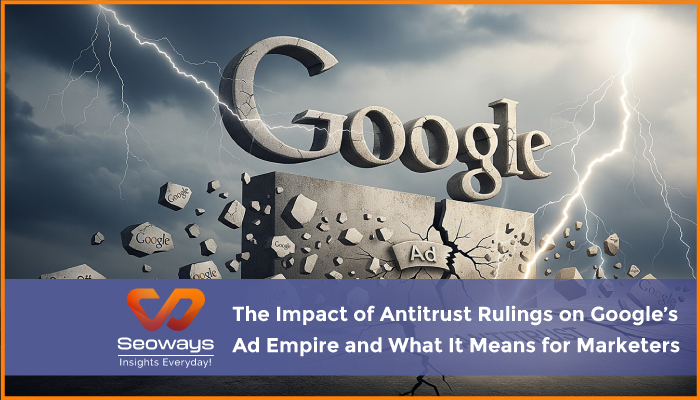
Google’s dominance in digital advertising has been the backbone of countless marketing strategies for years. Its search engine, ad platforms, and data collection capabilities have created an advertising empire that few companies can rival. However, antitrust rulings in 2025 have started reshaping this landscape, sending ripples through the marketing world.
For marketers, understanding these changes is not just a legal or regulatory exercise. It directly affects budgeting, strategy, and campaign performance. Let’s explore how these rulings impact Google’s ad business and what it means for those who rely on it to reach audiences.
Antitrust regulations exist to prevent monopolistic behavior and promote fair competition. In the context of Google, regulators have scrutinized practices like preferential treatment of its own products in search results, restrictions on competitors, and control over digital ad auctions.
Recent rulings have imposed stricter guidelines on Google, limiting certain practices that were once routine. The aim is to increase transparency, open opportunities for competitors, and ensure that advertisers are not overly dependent on a single platform.
One of the immediate outcomes of these rulings is a shift in how Google Ads operates:
These rulings bring both challenges and opportunities:
To navigate this evolving landscape, marketers should consider:
Marketers that proactively diversify have seen tangible benefits. Brands reallocating a portion of their budget to alternative platforms have maintained or even increased conversions despite Google’s stricter rules.
Meanwhile, companies that continued to focus solely on Google Ads experienced slower growth, as competition intensified and auction dynamics changed. These examples highlight the importance of flexibility and strategic foresight.
AI now plays a critical role in adapting to regulatory changes. Predictive analytics, automated optimization, and personalized content delivery allow marketers to respond faster to shifting conditions.
For example, AI tools can identify audience segments most likely to engage with a campaign, allocate budgets dynamically, and adjust messaging in real time. By combining AI insights with human creativity, advertisers can stay ahead of market changes while maximizing ROI.
Google’s ad empire will remain a dominant force, but the landscape is becoming more balanced. Antitrust rulings encourage innovation, competition, and transparency, creating opportunities for marketers to diversify and optimize campaigns.
Brands that embrace a multi platform strategy, invest in high quality content, and leverage AI analytics will likely outperform competitors who rely solely on traditional approaches. In essence, adaptability is the new currency of success in digital marketing.
| Section | Key Focus | Why It Matters |
| Antitrust Context | Regulatory overview | Understand why rulings matter |
| Changes in Google Ads | Bidding, transparency, reporting | Immediate impacts on campaigns |
| Marketer Implications | Challenges and opportunities | Strategic considerations |
| Strategic Adaptations | Multi platform, AI, UX | Steps to stay competitive |
| Market Shift Examples | Success and caution stories | Learn from practical outcomes |
| AI in Ad Strategy | Predictive analytics, optimization | Enhance decision making |
| Long Term Outlook | Future trends | Plan for evolving advertising ecosystem |


Request your best quote today!”

With the #1 Digital Marketing Agency!
We specialize in SEO, driving traffic, enhancing online visibility, and transforming markets with innovative strategies.
Seoways LLP,
1st Floor, SKK Complex,
Mohanur Road,
TN – 637001
Skype/Telegram: Seoways
Phone: +91 959 77 00 888