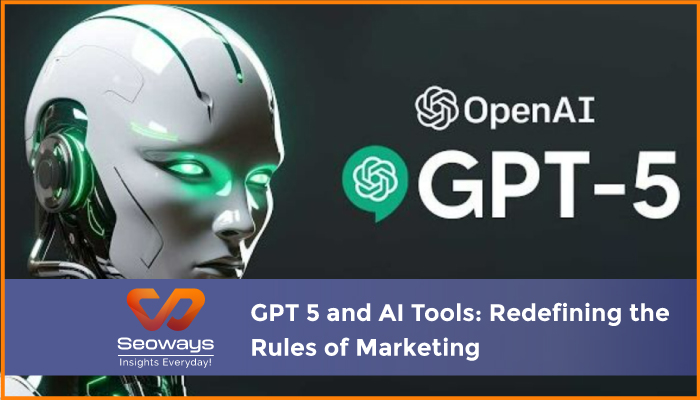
The marketing world is shifting faster than ever thanks to AI tools and GPT 5. Traditional strategies are evolving, and businesses must adapt to maintain relevance. From content creation to consumer insights, AI is changing not just how marketing is done but what it even means. This transformation opens new opportunities while posing fresh challenges for marketers willing to embrace change.
AI tools analyze data, predict consumer behavior, and even generate content. GPT 5 takes this to a new level with advanced language capabilities, contextual understanding and human like responses. Marketers now have the ability to create campaigns that are personalized, scalable and efficient.
AI helps optimize ad targeting, automate repetitive tasks, and even generate creative concepts. It allows marketers to spend less time on manual work and more on strategic thinking. The shift from intuition driven campaigns to data informed AI powered campaigns is reshaping the industry.
Content is king but AI tools are now co ruling the kingdom. GPT 5 can generate blog posts, social media content, emails and ad copies that feel natural and human. By analyzing audience preferences, AI ensures content is personalized for maximum engagement.
Dynamic content personalization allows marketers to deliver messages tailored to individual behavior, preferences and past interactions. This increases conversion rates and enhances customer satisfaction. AI also enables real time optimization, testing variations of content and adjusting campaigns on the fly.
Understanding the audience is critical. AI tools can process vast amounts of data from multiple sources to provide actionable insights. Predictive analytics powered by GPT 5 can forecast trends, predict customer churn and suggest optimal marketing strategies.
With these insights, marketers can proactively address customer needs, improve retention, and identify opportunities for upselling or cross selling. Data driven decision making becomes faster, more precise and more reliable than ever.
Automation often comes with the risk of losing a human touch. However GPT 5 allows marketers to automate routine tasks while maintaining creative integrity. AI can schedule posts, send personalized emails, and monitor performance metrics without compromising on originality.
Marketers can focus on conceptualizing campaigns, storytelling and strategic decisions while AI handles execution. This combination of human creativity and AI efficiency results in high quality campaigns that resonate with audiences.
While AI offers immense advantages, ethical considerations are crucial. Transparency in AI generated content, avoiding manipulation and respecting privacy are paramount. Marketers must ensure AI tools do not perpetuate biases or provide misleading information.
Balancing efficiency with responsibility helps build trust and maintains brand integrity. Ethical AI usage is becoming a key differentiator in competitive markets.
AI is powerful but not perfect. Dependence on data quality, potential biases, and over reliance on automation can hinder results. Marketers must critically evaluate AI recommendations, maintain human oversight, and continuously refine AI models to align with brand values.
The learning curve for GPT 5 and other AI tools can be steep. Teams need proper training and processes to integrate AI effectively into marketing workflows.
AI works best when it complements human expertise. Integrate GPT 5 into content creation, campaign planning and analytics without replacing the human element entirely.
Always review AI generated outputs. Ensure accuracy, brand voice consistency, and alignment with marketing objectives.
Use AI for A B testing, content variations and predictive modeling. Continuous experimentation allows marketers to discover what resonates best with audiences.
Be transparent with AI usage. Avoid misleading claims and ensure compliance with data privacy regulations.
Invest in training marketers to use AI tools effectively. Knowledge of AI capabilities and limitations is essential for strategic decision making.
Brands leveraging AI and GPT 5 have gained competitive advantages by delivering highly personalized campaigns at scale. They can quickly adapt to market trends, respond to consumer behavior, and optimize campaigns in real time. Those who fail to embrace AI risk falling behind, losing engagement, and missing opportunities to connect meaningfully with their audience.
AI will continue to evolve, making marketing more intelligent, data driven and customer centric. GPT 5 and future iterations will bring even deeper understanding of language, context and user intent. Marketers must embrace this evolution, balancing technology with creativity and ethics to succeed in the modern digital landscape.
GPT 5 and AI tools are redefining the rules of marketing. They offer unprecedented capabilities for personalization, automation and insights. However, success depends on human oversight, ethical use and strategic integration. Marketers who understand how to leverage AI effectively will lead the industry, while those who ignore it risk falling behind.
| Section | Key Idea | Takeaway |
| AI Transformation | How AI changes marketing processes | Enables data driven and scalable campaigns |
| Content Creation | Personalized content generation | GPT 5 improves engagement and conversion |
| Consumer Insights | Predictive analytics and trends | Anticipate customer needs and optimize strategy |
| Automation | Routine tasks without losing creativity | Focus human effort on storytelling and strategy |
| Ethics | Responsible AI usage | Build trust and maintain brand integrity |
| Challenges | Limitations and learning curve | Maintain oversight and quality control |
| Strategies | Integration, review, experimentation | Effective and ethical AI implementation |
| Future Outlook | Evolving AI capabilities | Marketers must adapt to stay competitive |


Request your best quote today!”

With the #1 Digital Marketing Agency!
We specialize in SEO, driving traffic, enhancing online visibility, and transforming markets with innovative strategies.
Seoways LLP,
1st Floor, SKK Complex,
Mohanur Road,
TN – 637001
Skype/Telegram: Seoways
Phone: +91 959 77 00 888