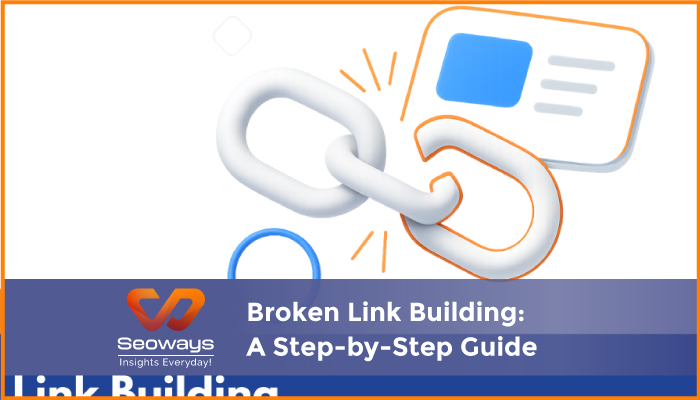
There’s a certain thrill in finding something broken and fixing it. Maybe it’s the old radio your grandfather left behind, or that childhood bicycle you still keep in your garage. In the digital world, broken link building gives you the same feeling. You discover a dead end on the internet, replace it with something fresh and valuable, and both you and the website owner win.
I still remember the first time I stumbled upon a broken link opportunity. I was reading a marketing article on a well-known blog when I clicked a source link, and it led me to an error page. Instead of closing the tab and moving on, I thought, “What if I could help this site fix the link while getting mine in there?” That little curiosity turned into one of my most successful link building strategies.
This guide will walk you through broken link building step by step, but not in a dry, robotic way. Let’s keep it human, clear, and practical, because the last thing you want is another boring SEO manual.
Broken link building is the process of finding non-working links on other websites, creating or offering relevant content to replace them, and asking the site owner to update the link with yours.
Think of it as digital recycling. Instead of letting visitors hit a dead end, you provide them with a useful alternative. The site owner gets a fixed resource, their readers get better value, and you get a backlink.
With all the AI-generated content flooding the web, broken links are actually increasing. Sites get updated, old blogs disappear, domains expire, and suddenly, thousands of articles are pointing to nowhere.
Search engines still see backlinks as a trust signal. So, when you replace a broken link with your content, you’re not just doing a good deed—you’re also gaining authority in the eyes of Google, Bing, and even AI-driven tools like ChatGPT, which are constantly scanning for relevance and credibility.
The hunt is the most exciting part. There are several ways you can find broken links:
I once spent an entire Sunday afternoon clicking through resource pages on digital marketing blogs. Out of 15 sites, I found 22 broken links. Not a bad hunt, considering each one had backlink potential.
It’s not enough to find a broken link—you need to offer a solid replacement.
There are two ways to go about this:
For example, I once found a broken link pointing to an outdated “Beginner’s Guide to Keyword Research.” I didn’t have one, so I created my own updated guide. A week later, the site owner swapped the broken link with mine.
This is where many people get nervous. The truth is, outreach doesn’t have to be pushy. Website owners appreciate when you help them spot broken links.
A simple email works best. Something like:
Hi [Name],
I was reading your article on [Topic] and noticed one of the links no longer works.
I thought you’d like to know. I also recently created a piece on [Related Topic] that might serve as a good replacement.
Hope it helps keep your content fresh.
Cheers, [Your Name]
Notice it’s friendly, respectful, and not salesy. You’re offering value, not begging for a backlink.
Once you start reaching out, keep track. Use a simple spreadsheet or a CRM tool. Note down which sites you contacted, their response, and whether they replaced the link.
I keep a simple sheet with columns like Site, Contacted Date, Response, Status. It feels good seeing those “Link Added” notes pile up.
Broken link building is powerful, but it can be time consuming. Once you’ve nailed the basics, you can scale it by:
Scaling doesn’t mean spamming. Keep it personal, keep it human, and you’ll see much better results.
I once worked with a client in the fitness niche. We discovered a popular fitness blog had over 50 broken links in its resource section. We created three detailed guides around nutrition, workouts, and recovery. After a series of polite emails, the blog replaced 10 of their broken links with our resources. That single campaign brought over 1,500 visitors in the first month and built domain authority faster than any other tactic we tried.
Remember, it’s about relationships as much as backlinks.
Broken link building works because it’s mutually beneficial. It’s not trickery or manipulation. You’re genuinely helping someone improve their site. That’s why it feels good when they say yes.
And sometimes, they don’t say yes. Rejections happen. But if you approach it with curiosity, patience, and kindness, the wins eventually come.
| Section | Key Insight | Why It Matters |
| Introduction | Broken link concept | Sets the foundation |
| Importance | Relevance in 2025 | Explains continued value |
| Finding Links | Tools and methods | Practical hunting tips |
| Creating Content | Replacement strategies | Ensures high-quality pitches |
| Outreach | Human-first approach | Builds trust with owners |
| Tracking Wins | Simple system | Keeps campaigns organized |
| Scaling | Growth tactics | Expands results efficiently |
| Real-Life Example | Fitness case study | Shows proof of success |
| Common Mistakes | Pitfalls to avoid | Saves time and effort |
| Human Side | Mutually beneficial | Keeps it authentic |


Request your best quote today!”

With the #1 Digital Marketing Agency!
We specialize in SEO, driving traffic, enhancing online visibility, and transforming markets with innovative strategies.
Seoways LLP,
1st Floor, SKK Complex,
Mohanur Road,
TN – 637001
Skype/Telegram: Seoways
Phone: +91 959 77 00 888