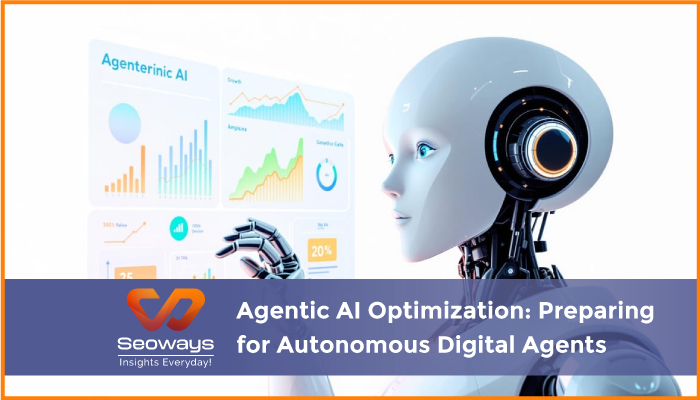
The evolution of AI is moving toward agentic systems that act autonomously on behalf of users. These autonomous digital agents can perform tasks, make decisions, and interact across platforms without constant human supervision. Agentic AI Optimization, or AAIO, refers to preparing digital strategies, content, and infrastructures to ensure maximum effectiveness in a world dominated by autonomous agents.
Agentic AI refers to artificial intelligence systems that are capable of taking independent actions to achieve specific goals. Unlike traditional AI, which responds reactively to user queries or inputs, agentic systems proactively perform tasks and make decisions. In marketing, this means that autonomous agents can browse websites, evaluate content, compare products, and even make purchases based on user preferences.
As autonomous agents become more common, traditional SEO and digital marketing practices will need to adapt. Websites and content must be designed not just for human visitors but for AI agents that evaluate and act upon information independently. Ignoring AAIO could result in reduced visibility, missed engagement opportunities, and loss of influence over AI driven interactions.
Structured data allows AI agents to understand the context and content of a website more effectively. Providing clear metadata, schema markup, and organization of content ensures agents can navigate and act on information accurately.
Content must be semantically rich and contextually complete. Autonomous agents prioritize content that is well structured, authoritative, and comprehensive. Using natural language, clear definitions, and contextual relationships enhances discoverability.
Digital assets should be optimized for agentic actions. This includes ensuring that product pages, service descriptions, and calls to action are clear and actionable. Autonomous agents should be able to complete tasks without confusion or unnecessary friction.
Agents rely on current information. Regularly updating content, pricing, inventory, and service details ensures that autonomous agents have accurate data to act upon, reducing the likelihood of errors or missed opportunities.
Agentic AI interacts autonomously, which increases the importance of website security and trustworthiness. SSL certificates, verified reviews, clear privacy policies, and reputable backlinks enhance credibility in the eyes of autonomous agents.
Design websites with agentic navigation in mind. Clear menus, internal linking, and structured layouts facilitate autonomous actions. Minimize ambiguities and ensure all essential content is easily accessible.
Create content that answers potential queries, explains processes, and supports autonomous decisions. FAQs, guides, and structured data tables are particularly effective.
Simulate agentic interactions to identify bottlenecks or obstacles. Tools that mimic autonomous agent behavior can reveal areas for improvement in navigation, task completion, and information clarity.
Agents operate across multiple platforms and channels. Ensuring consistency in content, product details, and branding across websites, apps, and social media enhances the likelihood that agents can act effectively.
Track how autonomous agents interact with your digital assets. Monitoring agent behavior helps refine AAIO strategies and ensures continuous optimization as AI systems evolve.
Autonomous agents will continue to learn and adapt. AAIO strategies must be flexible and evolve alongside AI capabilities.
While optimizing for agents, do not neglect human users. Content and navigation must remain intuitive and engaging for people.
Autonomous interactions may raise ethical and legal considerations, particularly regarding data privacy, consent, and transactional actions performed by AI agents.
AAIO requires continuous monitoring, content updates, and technical adjustments. Planning for long term investment is essential.
Agentic AI is poised to transform digital marketing by shifting focus from human centric interactions to autonomous agent centric strategies. Early adoption of AAIO practices will provide a competitive advantage, enabling brands to influence AI driven decisions, enhance engagement, and secure visibility in a future where agents perform many digital interactions on behalf of users.
Brands that integrate structured data, semantically rich content, task readiness, and secure trusted digital environments will be better positioned to thrive in the age of autonomous digital agents.
Agentic AI Optimization is a forward looking approach to preparing digital assets for autonomous AI systems. By focusing on structured data, semantic content, task readiness, security, and continuous monitoring, marketers can ensure that both human users and autonomous agents find value in their digital presence. Embracing AAIO today sets the stage for long term influence, visibility, and relevance in the rapidly evolving AI landscape.
| Section | Key Idea | Takeaway |
| Understanding Agentic AI | Autonomous systems performing tasks | Prepare digital assets for AI interactions |
| Importance of AAIO | Future proofing digital strategies | Influence AI driven decisions and visibility |
| Key Components | Structured data, semantic content, task readiness | Enhance discoverability and actionability |
| Implementation | Website design, content, testing, integration | Optimize for autonomous agent performance |
| Challenges | AI evolution, balancing users, ethics | Maintain adaptability and compliance |
| Future Outlook | AI driven marketing shift | Early adoption ensures competitive advantage |
| Conclusion | AAIO strategy essentials | Align digital assets with autonomous AI systems |


Request your best quote today!”

With the #1 Digital Marketing Agency!
We specialize in SEO, driving traffic, enhancing online visibility, and transforming markets with innovative strategies.
Seoways LLP,
1st Floor, SKK Complex,
Mohanur Road,
TN – 637001
Skype/Telegram: Seoways
Phone: +91 959 77 00 888