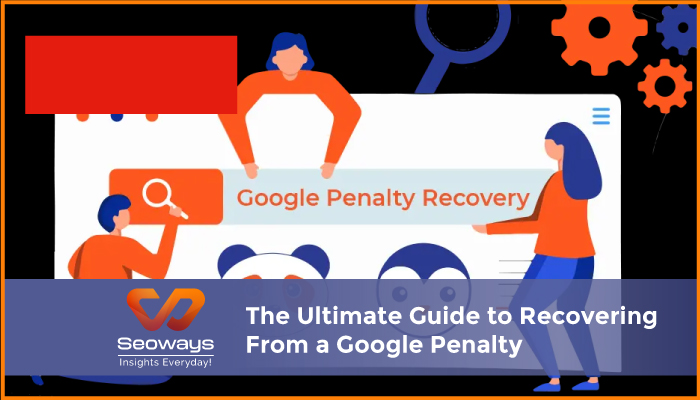
Getting hit with a Google penalty can feel like a digital nightmare. One day your traffic is thriving, and the next it plummets. Penalties can come from algorithm updates, manual actions, or even accumulated SEO mistakes. While the situation can be stressful, recovering from a Google penalty is entirely possible with the right strategy.
In this guide, we’ll explore why penalties happen, how to identify them, practical steps to recover, and tips to prevent future issues. Real-world examples and actionable advice will help you regain rankings and traffic efficiently.
Google penalties are measures taken to enforce quality standards and ensure users get the most relevant and trustworthy results. They can be classified into two main types: algorithmic penalties and manual penalties.
Algorithmic Penalties
These occur automatically when a website violates Google’s ranking algorithms. Examples include Panda and Penguin updates. Algorithmic penalties are typically triggered by low-quality content, spammy backlinks, or keyword stuffing.
Manual Penalties
Manual penalties happen when a human reviewer evaluates your website and determines that it violates Google’s guidelines. You’ll usually receive a notification in Google Search Console if your site has been manually penalized.
Understanding the type of penalty you’re facing is the first step toward recovery.
Check Google Search Console
Google Search Console provides alerts for manual penalties and notifications of suspicious activity. Reviewing messages here can help identify the issue.
Analyze Traffic Drops
If your traffic declines sharply after an algorithm update, it might be algorithmic. Tools like Google Analytics or SEMrush can help track changes in organic traffic over time.
Audit Your Backlink Profile
Low-quality or spammy backlinks often trigger penalties. Use tools like Ahrefs, Moz, or SEMrush to identify harmful links.
Review On-Page SEO
Over-optimized anchor text, keyword stuffing, and thin content can contribute to penalties. Examine your site for such issues.
Step 1: Conduct a Full Site Audit
Perform a comprehensive audit to identify technical, on-page, and off-page issues. Focus on areas like duplicate content, slow page speed, broken links, and poor mobile optimization.
Step 2: Remove or Disavow Harmful Backlinks
If spammy backlinks are the issue, reach out to webmasters to remove them. If removal is not possible, use Google’s disavow tool to prevent these links from affecting your site.
Step 3: Improve Content Quality
Update low-quality or thin content by adding depth, examples, visuals, and clear structure. Ensure all content is original, informative, and valuable to your audience.
Step 4: Submit a Reconsideration Request (for Manual Penalties)
Once issues are resolved, submit a reconsideration request through Google Search Console. Include a detailed explanation of what you fixed and why your site now complies with guidelines.
Step 5: Monitor and Adjust
After taking corrective action, monitor traffic, rankings, and backlinks. Penalty recovery is often gradual, and continuous monitoring helps ensure you stay compliant.
I once consulted for a small e-commerce website that lost 60 percent of its organic traffic after a Penguin update. Their backlink profile included hundreds of low-quality directory links. We identified toxic links, disavowed them, and improved content on key pages. Within three months, traffic started recovering, and by six months, the site regained nearly all lost rankings.
Focus on High-Quality Content
Original, well-researched, and engaging content is less likely to trigger penalties. Avoid duplicating content or keyword stuffing.
Build Natural Backlinks
Avoid spammy link-building practices. Focus on earning backlinks through guest posting, outreach, and creating shareable resources.
Stay Updated With Google Guidelines
Algorithm updates happen frequently. Regularly reviewing Google’s guidelines helps you stay compliant and avoid future penalties.
Regular SEO Audits
Conduct periodic audits to detect potential issues early. Check for broken links, slow pages, and outdated content.
Recovering from a Google penalty is rarely instantaneous. It requires patience, consistent effort, and careful monitoring. Some algorithmic penalties can take weeks or months to lift naturally, while manual penalties depend on Google’s reconsideration process. Persistence, attention to detail, and continuous improvement are key to regaining lost rankings.
A Google penalty is a serious but solvable challenge. By identifying the type of penalty, auditing your site, fixing critical issues, and following best practices for content and backlinks, you can recover lost traffic and rankings. Prevention is equally important—focus on high-quality content, ethical link-building, and regular audits to stay ahead.
With the right strategy, even a severe penalty can become an opportunity to strengthen your website and improve long-term SEO performance.
| Section | Key Points | Insights |
| Understanding Penalties | Algorithmic vs. manual penalties | How penalties occur and why |
| Identifying the Cause | Search Console, traffic drops, backlinks, on-page SEO | Tools and methods to find issues |
| Recovery Steps | Site audit, backlink removal, content improvement, reconsideration | Step-by-step recovery process |
| Real-World Example | E-commerce site affected by Penguin | Lessons from successful recovery |
| Prevention | High-quality content, natural backlinks, guidelines, audits | Strategies to avoid future penalties |
| Patience & Persistence | Monitoring, adjusting, continuous improvement | The importance of long-term effort |
| Conclusion | Summary of actions and strategies | Turning penalties into growth opportunities |


Request your best quote today!”

With the #1 Digital Marketing Agency!
We specialize in SEO, driving traffic, enhancing online visibility, and transforming markets with innovative strategies.
Seoways LLP,
1st Floor, SKK Complex,
Mohanur Road,
TN – 637001
Skype/Telegram: Seoways
Phone: +91 959 77 00 888