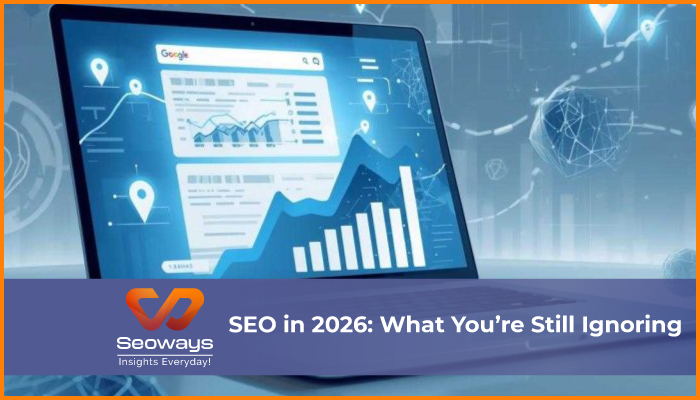
SEO in 2026 is not broken.
It is not dead.
It is not owned by AI tools either.
But it has quietly changed direction while most people were busy repeating old tactics with new buzzwords.
Many brands still think SEO means keywords, backlinks, and publishing more content than competitors. That mindset is now the biggest liability. Search engines have matured. AI answer systems have matured even faster. And user behavior has shifted in ways most dashboards never reveal.
What is being ignored today is not advanced. It is basic. But it requires unlearning habits that once worked very well.
Let us get into what really matters now.
They Evaluate Experiences
This is the first uncomfortable truth.
Search engines in 2026 are far less interested in your page than in what happens around your page. They look at how users arrive, how they interact, whether they feel satisfied, and if they need to return to search again.
If your page answers a question but creates confusion, hesitation, or distrust, it loses value over time.
Think about two similar websites.
One publishes technically perfect articles filled with keywords and structure.
The other feels calm, clear, and oddly trustworthy even with simpler writing.
The second one wins more often now.
Why?
Because search systems are trained on user satisfaction signals at scale. Not just clicks. Not just time. But patterns of behavior that signal relief, confidence, and completion.
This is why obsessing over traditional ranking factors without caring about user comfort is a silent killer.
Not for Minds
Many SEO articles in 2026 look impressive but feel empty. They are optimized to be parsed, not remembered.
Here is the reality.
AI powered search systems do not just read content. They summarize it, extract meaning, compare tone, and measure originality through language patterns.
If your content sounds like a rewritten version of what already exists, it becomes invisible to both humans and machines.
Clean copywriting matters more now than clever SEO tricks.
Simple sentences.
Clear ideas.
Natural flow.
Occasional human quirks.
Not everything needs to be polished. Some parts should feel conversational. Almost like someone thinking out loud while explaining.
Ironically, the more human your content feels, the easier it becomes for AI systems to trust and reuse it.
It Is About Memory
Many brands still chase topical authority by publishing dozens of related articles. Quantity feels productive. But memory is what matters now.
Search engines and AI tools prioritize sources that show consistent reasoning across topics. They want alignment, not repetition.
If your article about SEO strategy contradicts your article about content quality, your authority weakens.
If your advice changes tone every few posts, your trust score drops quietly.
In 2026, authority is built when your content feels like it comes from one thinking mind, not many stitched together.
That is why some smaller sites outperform massive blogs.
They are memorable.
They Are Your First Audience
This is one of the most ignored shifts.
People think ranking inside AI tools requires special formatting or technical tricks. That is only half true.
AI answer engines prioritize content that is:
Easy to summarize
Conceptually clear
Free from fluff
Grounded in real logic
If your content can be understood by a smart human in one read, it can be reused by an AI system with confidence.
If it relies on jargon, filler phrases, or exaggerated claims, it gets filtered out.
Writing for AI does not mean writing like AI.
It means writing with clarity, structure, and intent.
This used to sound ridiculous. Not anymore.
Search engines measure consistency across content, metadata, brand mentions, and even off site references.
If your homepage sounds premium but your blog sounds generic, that inconsistency hurts perception.
If your tone shifts between aggressive sales and educational calm, trust erodes.
In 2026, SEO is tightly connected to branding. Not logos or colors, but voice and attitude.
Strong brands rank easier because their content feels intentional.
Weak brands struggle because everything sounds borrowed.
But Context Matters More Than Source
Backlinks have not disappeared. But their value has shifted.
A link from a powerful site that does not contextually align with your topic is weaker than a smaller site that deeply understands the subject.
Search engines evaluate the semantic relationship between the linking page and the linked page.
Random placements. Generic anchors. Forced outreach.
These patterns are increasingly easy to detect.
The safest links in 2026 are earned naturally through relevance, not traded through volume.
It Is About Resolution
Many people still track bounce rate and time on page without understanding what success actually looks like.
If a user searches a question, lands on your page, gets a clear answer, and leaves satisfied, that is a win.
Trying to artificially increase time by adding fluff now backfires.
Search engines are smart enough to recognize when users do not need more.
Resolution is the new engagement.
Did the user feel done?
It Evolves Faster Than Keywords
A keyword in 2023 may represent a completely different intent in 2026.
For example, people searching for SEO tools now often expect AI assisted workflows, not traditional dashboards.
If your content still reflects old expectations, relevance drops even if keywords match.
Intent refresh is critical.
This means revisiting old content not to add words, but to update perspective.
The best ranking pages in 2026 are not always the newest. They are the most contextually updated.
This is subtle and dangerous.
Perfect headings.
Perfect keyword ratios.
Perfect internal linking.
All of this can make content feel unnatural.
Search engines are trained on real human writing. When content feels engineered, it stands out.
Slight imperfections actually help.
A casual phrase.
A sentence that sounds spoken.
A minor grammar slip.
These signals increase authenticity.
Trying to be flawless now often means being filtered.
Many teams still chase metrics without understanding meaning.
Rankings fluctuate daily.
Traffic graphs spike and drop.
Clicks look good on paper.
But what changed in user behavior?
Did people convert faster?
Did support tickets reduce?
Did brand searches increase?
SEO in 2026 is not about traffic. It is about downstream impact.
If your SEO efforts do not improve real business outcomes, search systems eventually notice.
People increasingly search with expectations shaped by past behavior.
Location.
Device.
Search history.
Brand familiarity.
This means rankings are no longer universal.
Your site may rank number one for one user and number six for another.
This is why obsessing over single rank positions is outdated.
Focus instead on becoming the obvious answer within your niche.
Familiarity wins.
SEO Is Slower but Stronger Now
SEO in 2026 rewards patience, clarity, and conviction.
Shortcuts fade quickly.
Tricks expire silently.
But strong thinking compounds.
If you focus on making content that feels useful, calm, and honest, both search engines and AI systems notice.
Most people are still ignoring this shift.
Which is exactly why it works.
| Section Topic | Core Idea | Why It Matters |
| Search Experience | User satisfaction over pages | Drives long term rankings |
| Content Writing | Human clarity beats optimization | Improves trust and reuse |
| Authority Building | Memory over volume | Sustains visibility |
| AI Search | AI as audience | Expands reach |
| Links and Context | Relevance over power | Safer link value |
| Engagement Signals | Resolution over time | Aligns with intent |
| Brand Voice | Consistency matters | Builds trust |
| Optimization Limits | Imperfection helps | Avoids filters |


Request your best quote today!”

With the #1 Digital Marketing Agency!
We specialize in SEO, driving traffic, enhancing online visibility, and transforming markets with innovative strategies.
Seoways LLP,
1st Floor, SKK Complex,
Mohanur Road,
TN – 637001
Skype/Telegram: Seoways
Phone: +91 959 77 00 888