
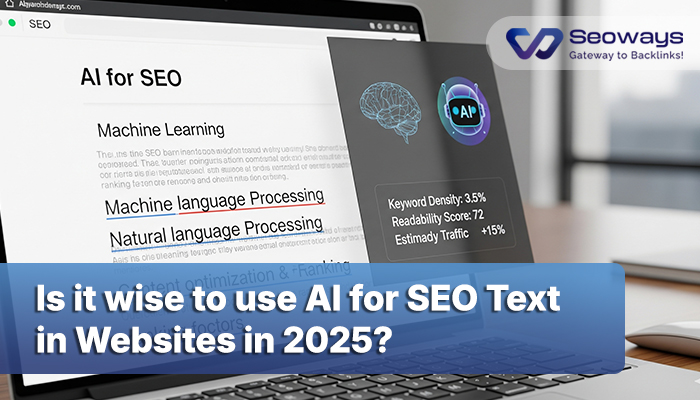
Back in 2010 websites climbed to the top of Google simply by stuffing keywords into text. Today the rules are different. Search engines have matured and so have users. Google is smarter at detecting whether a page actually helps people or simply tries to game the system. This evolution has left many website owners wondering if AI generated text is the secret weapon or a silent risk.
As someone who has spent more than a decade in the SEO trenches I have seen both sides. I have seen businesses crash after updates because their content was soulless and repetitive. I have also seen websites thrive when AI was used thoughtfully as an assistant not a replacement. The truth in 2025 is more nuanced than either extreme.
AI tools are like a digital printing press. They can create blogs, guides, and product descriptions in seconds. That speed is intoxicating for marketers who want to scale. The cost is another advantage. Hiring a skilled writer for hundreds of articles is expensive. AI offers a tempting shortcut.
But the shortcut comes with a warning. Not all AI text is equal. Some tools produce bland paragraphs that feel like filler. Others craft polished drafts that could rival a junior copywriter. The difference lies in how you use the tool and how much human creativity you inject afterward.
There is a myth that Google punishes AI content automatically. That is not true. Google punishes low quality content regardless of whether a human or a machine wrote it. What matters is whether the page demonstrates experience expertise authority and trust.
I still remember a client in 2023 who published two hundred AI written blogs in a single month. They lost fifty percent of their organic traffic overnight after a core update. Not because the articles were written by AI but because they were thin and unhelpful. On the other hand another client used AI to build detailed drafts which their team polished with real life case studies and visuals. Their rankings grew steadily.
The lesson is clear. Google rewards helpfulness not authorship.
Readers can sense when a text has no pulse. I once tested this myself by publishing two versions of the same guide on different websites. The first was pure AI text. The second was AI assisted but I added my personal stories from working with clients. The second version attracted comments shares and backlinks while the first barely got noticed.
This is the difference between information and insight. AI can summarize information but it cannot replicate lived experience. In 2025 successful websites weave AI efficiency with human authenticity.
There are real dangers in leaning fully on AI.
I recall seeing five competing websites publish almost identical articles about the same trending topic. All generated with AI. Guess what happened. None of them ranked well because Google detected redundancy. The winner was a site that covered the same topic but added unique data from its own surveys.
AI is a tool not a strategy. Here is how to make it work in your favor.
When used like this AI saves time without sacrificing trust.
A boutique travel website I advised used AI to create destination overviews. The writers then layered in personal reviews of hotels and hidden spots. Those articles ranked above larger competitors because they blended efficiency with authenticity.
An ecommerce store selling organic skincare used AI to outline product care guides. The founder then added her personal journey battling skin problems. Customers connected deeply and the guides drove both rankings and sales.
These are not miracles. They are simply the result of treating AI as an assistant rather than a ghostwriter.
Looking ahead AI will only become more powerful. But search engines will also become sharper at spotting value versus fluff. Imagine a web filled with millions of AI generated pages that all read the same. That is not the future users want.
The future belongs to creators who blend machine efficiency with human soul. Brands that speak with honesty authority and personality will always rise above robotic sameness.
So is it wise to use AI for SEO text in 2025 The answer is yes if you use it wisely. Treat it like a smart intern not a seasoned strategist. Let AI handle the repetitive parts while you inject creativity depth and authenticity.
The websites that thrive will not be the ones who publish the most AI articles but the ones who publish the most helpful ones.
| Section | Key Insight |
| Changing Landscape | SEO rewards helpfulness not tricks |
| Why People Turn to AI | Speed and cost are tempting but risky |
| Google’s View | No penalty for AI only for low quality |
| Human Experience | Real stories outperform generic AI text |
| Risks | Generic tone factual slips lack originality |
| Best Practices | Draft with AI enrich with human input |
| Real World Examples | Travel and ecommerce brands thrived by mixing AI with experience |
| Future Outlook | AI will grow but authenticity will win |
| Final Verdict | Wise if used as assistant not replacement |


Request your best quote today!”

With the #1 Digital Marketing Agency!
We specialize in SEO, driving traffic, enhancing online visibility, and transforming markets with innovative strategies.
Seoways LLP,
1st Floor, SKK Complex,
Mohanur Road,
TN – 637001
Skype/Telegram: Seoways
Phone: +91 959 77 00 888