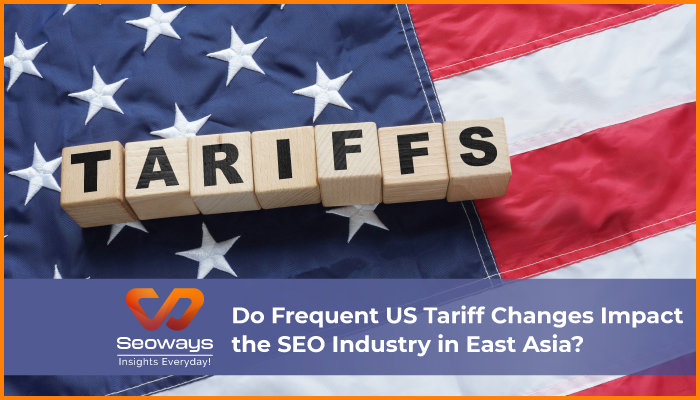
In 2026, global economics are closely intertwined with digital businesses, especially SEO services. Companies in East Asia provide SEO, content, and digital marketing services for clients around the world, with a significant portion coming from the US. But what happens when US tariffs change frequently? Do these shifts truly impact the SEO industry in East Asia, or is it just noise?
The answer is nuanced. While SEO is primarily a digital service and not a physical export, indirect effects of tariff changes can ripple through client budgets, outsourcing patterns, and even the type of projects being requested. Let’s dive into how this works.
Tariffs are taxes on imported goods. In theory, they target physical products like electronics, clothing, or machinery. Digital services, such as SEO, are not directly taxed. However, there is an indirect connection.
When tariffs increase, US companies may face higher costs for products they sell. To maintain margins, they may reduce spending on external services, including marketing and SEO. Conversely, when tariffs drop, companies might regain budget flexibility.
This means East Asian SEO providers could see fluctuations in project size, frequency, and willingness to invest in long-term campaigns depending on the US economic climate.
The SEO industry is surprisingly sensitive to global trade. Here’s why:
Imagine a US company selling electronics sourced from Asia. If tariffs rise, their costs go up. To compensate, they may reduce spending on SEO campaigns or opt for lower-cost providers. While the SEO services themselves are digital, their budgets are tied to physical product economics.
Frequent tariff changes create uncertainty. Businesses respond by adopting a more cautious approach:
East Asian SEO providers often need to adapt. Agile agencies that can adjust pricing models or scale services up and down quickly tend to weather tariff fluctuations better than those locked into rigid contracts.
Some SEO services are more sensitive to budget shifts than others:
The point is that while tariffs don’t touch the service itself, they influence what clients prioritize, what they pay for, and how much risk they take on long-term campaigns.
Frequent tariff changes often affect currency exchange rates. If the US dollar strengthens against Asian currencies, clients may find outsourcing slightly cheaper, which can temporarily benefit SEO providers. Conversely, a weaker dollar can make services more expensive for US companies, leading them to negotiate more aggressively or reduce scope.
In 2026, SEO agencies in East Asia need to factor in these dynamics. Understanding both currency trends and client risk tolerance is key to maintaining stable revenue streams.
Long-term contracts can shield East Asian SEO agencies from volatility caused by US tariffs. Companies that rely on recurring services like ongoing SEO retainers, content production, or paid ad management can negotiate multi-month agreements with some flexibility in pricing adjustments.
This approach reduces the stress of frequent economic shifts and creates a more predictable cash flow, which is especially important in regions where the SEO industry is growing fast but still competitive.
In 2026, agility is everything. Agencies that quickly adjust to client needs, pricing constraints, and shifting project types outperform rigid competitors. Here are some strategies:
Agility doesn’t just help with tariffs; it strengthens the business overall and ensures agencies are seen as reliable partners.
It’s important to note that for certain clients and industries, US tariff changes have minimal impact on SEO spending. Large enterprises, subscription-based SaaS companies, and tech firms often have dedicated marketing budgets that are less sensitive to import/export costs.
Thus, the effect of tariff fluctuations is not uniform. East Asian SEO providers need to segment clients and adjust expectations accordingly.
Do frequent US tariff changes impact the SEO industry in East Asia? Yes, but mostly indirectly. They influence client budgets, project priorities, and risk appetite rather than directly affecting the digital service itself. Agencies that understand these nuances and remain agile in their offerings can continue to thrive.
In 2026, the real winners are not the agencies that complain about external factors. They are the ones who adapt, predict client behavior, and maintain steady service quality despite global economic fluctuations.
| Section | Key Focus | Best For |
| Understanding US Tariffs | Connection to digital services | Beginners and decision-makers |
| SEO Budgets & Trade Health | How client spending is affected | Agencies and freelancers |
| Client Behavior | Project scope and negotiation | Agency managers |
| Service Type Sensitivity | Which services are impacted | SEO specialists |
| Currency & Outsourcing | Exchange rates and pricing | International agencies |
| Long-Term Contracts | Stabilizing revenue | Agency owners |
| Agility Advantage | Flexible strategies for volatility | All SEO professionals |


Request your best quote today!”

With the #1 Digital Marketing Agency!
We specialize in SEO, driving traffic, enhancing online visibility, and transforming markets with innovative strategies.
Seoways LLP,
1st Floor, SKK Complex,
Mohanur Road,
TN – 637001
Skype/Telegram: Seoways
Phone: +91 959 77 00 888