
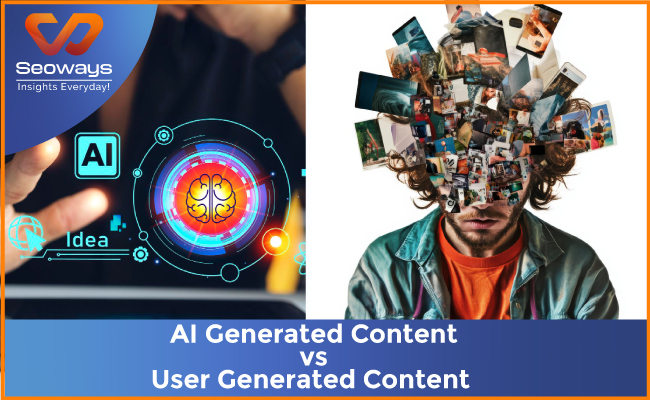
The internet in 2025 is a battlefield of words, ideas, and influence. On one side, we have the rise of Artificial Intelligence, producing polished paragraphs at lightning speed, flooding blogs, feeds, and search engines with more content than ever before. On the other side, we have real users, humans who bring emotion, authenticity, and raw experiences to the digital world. The clash between AI Generated Content and User Generated Content has become one of the most defining narratives of this decade.
The question is no longer whether AI can write. The question is whether it can connect. And in that lies the fate of the future web.
This article takes you deep into the truth about AI Generated Content versus User Generated Content in 2025. You will discover why both are powerful, where each falls short, and how the smartest creators and businesses are blending the two to win the attention game.
In just three years, AI tools have gone from quirky assistants to full scale publishing machines. What once required a content team of ten can now be executed by one person and a smart algorithm. Articles, scripts, emails, captions, and even video transcripts pour out of AI engines at a speed the human brain cannot compete with.
The advantages are undeniable. Businesses cut costs. Marketers scale campaigns in hours instead of weeks. Search engines receive millions of new pages every day powered by AI. The playing field has been flooded with infinite content.
But there is a hidden challenge. Too much of the same thing. When every article looks similar, when every product description feels robotic, when every blog post follows the same patterns, audiences stop paying attention. AI content wins in quantity but often struggles with originality and soul.
While AI is filling the web with polished words, User Generated Content has quietly become the most trusted form of digital influence. Reviews on Amazon, unfiltered TikTok videos, raw testimonials on Instagram, podcast rants, Reddit threads, and community discussions are shaping consumer behavior more than professional blogs ever did.
Why? Because it is human. When someone shares their story of trying a new skincare brand, or records the messy reality of learning a new skill, it carries a level of authenticity that machines cannot fake. This trust is priceless.
Brands have realized that their most powerful marketing asset is no longer their official campaign but what customers say about them online. In 2025, User Generated Content is not just a bonus. It is the backbone of trust and reputation.
Humans are wired to detect authenticity. When you read a story about someone’s personal struggle with weight loss or their excitement after buying their first car, it lights up parts of your brain connected to empathy and social bonding. AI can describe the same journey in perfect grammar, but it lacks the imperfections and emotions that make people connect.
This is why a shaky video filmed on a phone can outperform a highly produced advertisement. The human touch carries weight that machines are still struggling to replicate.
Although authenticity gives User Generated Content the edge in trust, AI is not losing the war. Far from it. AI generated content wins in areas where speed, scale, and efficiency matter most.
For businesses that need hundreds of product descriptions, detailed knowledge base articles, or data driven reports, AI is the ultimate partner. It delivers fast, consistent, and optimized text that gets the job done.
AI also excels in multilingual publishing. A single idea can be transformed into ten languages with minimal effort, something nearly impossible for human-only teams. This is why global companies are embracing AI as a key weapon in their content arsenal.
The real winners in 2025 are not choosing between AI Generated Content and User Generated Content. They are merging them.
Imagine this: An AI tool creates a detailed article about fitness routines. A real user then adds their personal story, photos, and progress journey. The result is a hybrid piece of content that combines credibility with trust.
This blended approach is becoming the gold standard. AI handles the structure, data, and polish. Humans provide the authenticity, emotion, and real world proof. Together, they create content that is both scalable and believable.
By 2025, the internet has reached a state of content overload. There is more content than people could ever consume. The war is no longer about who can publish more. It is about who can stand out.
This is why User Generated Content has surged in importance. When millions of AI written articles compete for the same keywords, the deciding factor is often which one feels real and trustworthy. Search engines are evolving too, giving more weight to authenticity signals such as reviews, conversations, and engagement metrics.
Google, Bing, and even AI driven search platforms are changing the rules of ranking. It is no longer just about keyword density or backlinks. Engines now evaluate freshness, engagement, sentiment, and authenticity.
An AI written article that reads perfectly may still lose to a messy Reddit thread that goes viral. Why? Because search engines have learned that user trust is worth more than technical perfection.
This shift is why brands in 2025 are pouring more resources into building communities, encouraging customers to share experiences, and amplifying user voices.
The most important currency of content today is story. Whether it comes from AI or humans, the content that wins is the one that tells a story people care about.
AI can generate frameworks and data stories. But humans create lived stories. The future of content is not one or the other, but stories that combine data and emotion.
Looking ahead, AI will continue to improve. It will learn tone, adapt styles, and simulate emotion more convincingly. Yet, even in its most advanced form, it will always lack lived human experience.
User Generated Content will remain the most trusted form of digital storytelling. What will change is how the two merge. AI will become the invisible editor, the assistant that amplifies human voices rather than replacing them.
The brands and creators who thrive in this future will not fear AI. They will use it to scale, while doubling down on authenticity.
The battle between AI Generated Content and User Generated Content in 2025 is not about who wins. It is about who blends.
AI offers efficiency, scalability, and structure. Humans offer trust, relatability, and emotion. Together, they create content that resonates, ranks, and converts.
The internet of the future will not be built by machines or humans alone. It will be built by the synergy between the two.
Brief Table of Contents
| Section | Key Idea |
| Explosion of AI Content | AI delivers speed and scale but risks sameness |
| Rise of User Content | Human voices drive trust and authenticity |
| Psychology of Trust | Imperfection and emotion create connection |
| Where AI Wins | Speed, multilingual publishing, cost efficiency |
| Middle Ground | AI plus human collaboration is the gold standard |
| Content Saturation | Trust beats quantity in overloaded web |
| Role of Search Engines | Authenticity now matters more than perfection |
| Power of Storytelling | Stories remain the ultimate currency |
| Future Collaboration | AI as assistant, humans as storytellers |
| Conclusion | The future belongs to blended content |


Request your best quote today!”

With the #1 Digital Marketing Agency!
We specialize in SEO, driving traffic, enhancing online visibility, and transforming markets with innovative strategies.
Seoways LLP,
1st Floor, SKK Complex,
Mohanur Road,
TN – 637001
Skype/Telegram: Seoways
Phone: +91 959 77 00 888